Needs verification
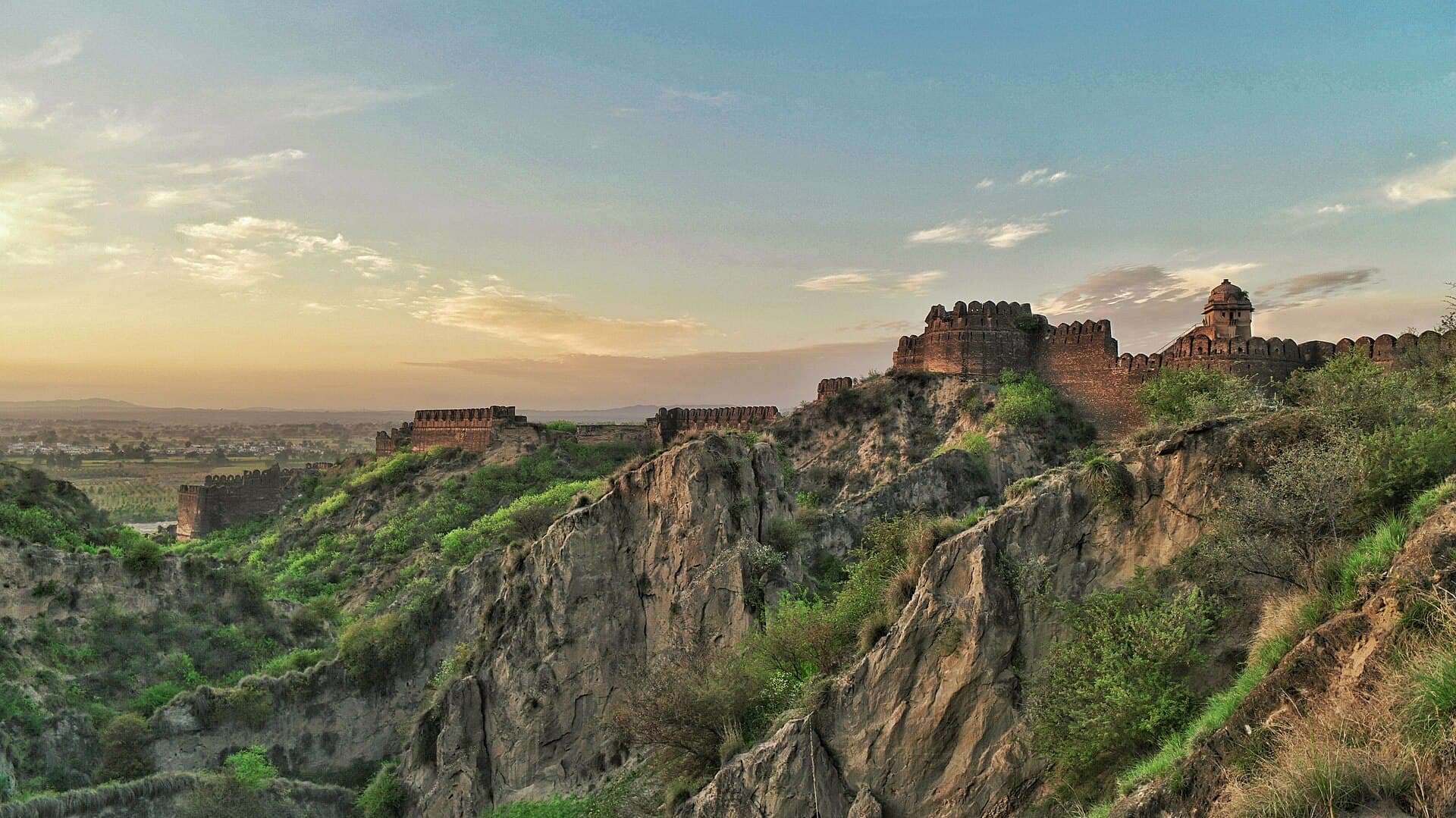
Rohtas Fort
A sixteenth-century garrison fort above the Kahan river near Jhelum, a UNESCO World Heritage Site since 1997.
- Best season
- Autumn · Winter · Spring
- Suggested duration
- 1 day
A Hindu temple complex around a sacred pool in the Salt Range, and an active pilgrimage site.
Anything we haven't confirmed is labelled clearly rather than guessed at.
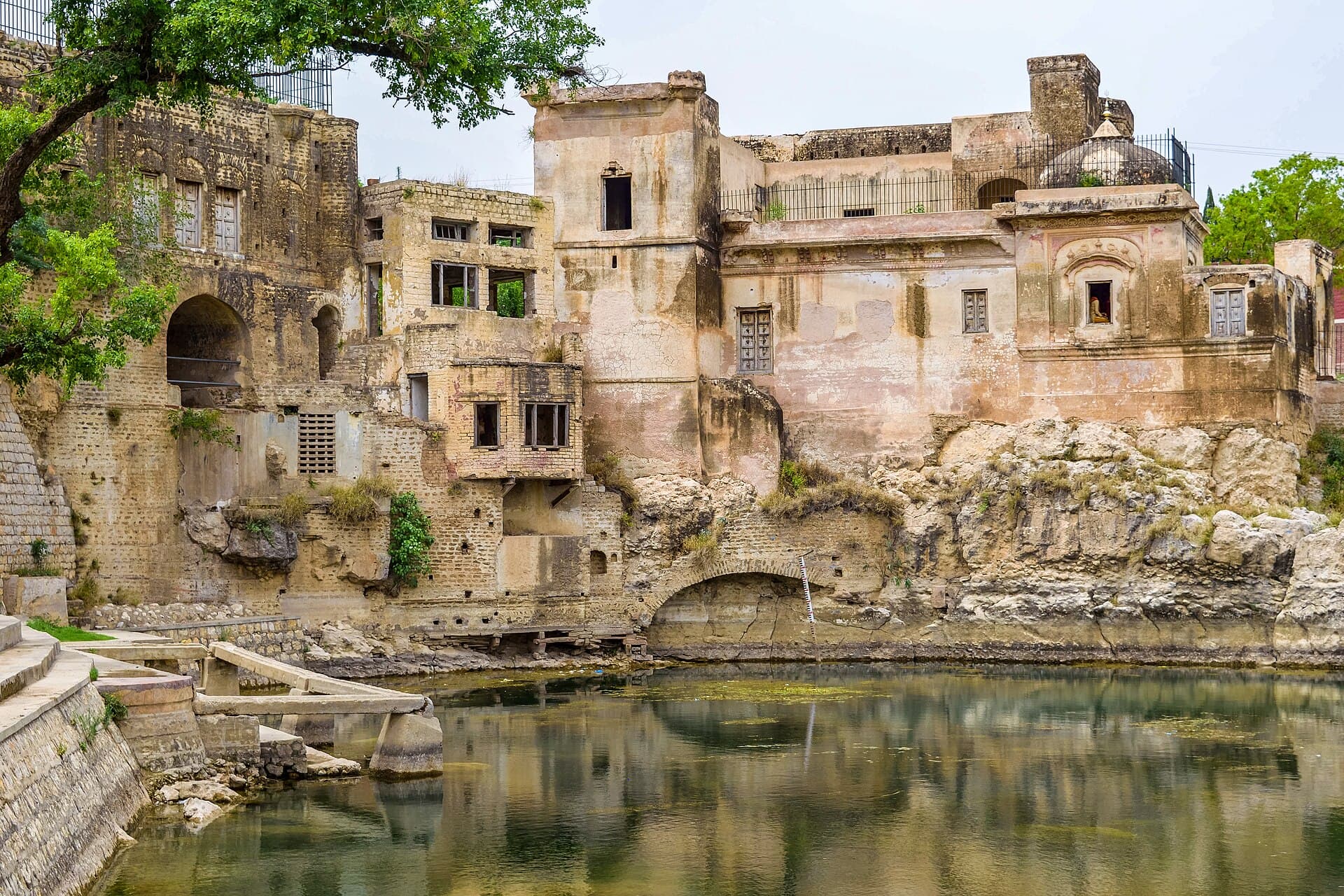
The complex is built around a pool that gives the place its meaning: in Hindu tradition the water is associated with the grief of Shiva, and the temples accumulated around it rather than being laid out at once. The buildings span a long period and several styles, some restored and some visibly not, stacked on the rock above the water. It is an active pilgrimage site as well as a monument — organised pilgrim groups visit, and the site is managed with that in mind. Visitors should treat it as a place of worship first. The Salt Range setting, dry and open, is part of what makes the pool striking.
The temples accumulated around the pool rather than being laid out at once.
A spring-fed pool below a rocky outcrop in the dry Salt Range, with temple buildings stepped above the water.
A Hindu sacred site in a Muslim-majority district, visited by pilgrims and maintained as a heritage site.
Travellers interested in religious heritage and the architecture of the Salt Range
A half-day visit, often combined with Rohtas Fort or the Salt Range road
Estimated visit length: Half a day
Every photo is real and credited — see the attribution section below for the full list.
A spring-fed pool below a rocky outcrop in the dry Salt Range, with temple buildings stepped above the water.
Pilgrim groups visit the pool; the complex is in use, not only preserved.
Temples and havelis of different periods built up around the same water.
Buildings stacked on the rock face directly over the pool.
Availability is seasonal and not confirmed as currently operating — see each activity's verification status.
The pool, temples and surviving haveli buildings.
The spring-fed pool at the centre of the site; bathing is a religious act, not a visitor activity.
The Salt Range is hot and exposed in summer; early morning is the usual advice.
Seasonal access and weather conditions may change. Verify locally before travel.
A structural preview only. Detailed routes, driving times and road quality are coming in Phase 5.
Interactive route map
Detailed routes coming in Phase 5
Availability is never claimed without evidence — unconfirmed facilities default to unknown or needs-verification.
Limited on site; the nearest options are on the Salt Range road.
Accommodation is in Chakwal or on the motorway corridor.
Weather and trail conditions change without notice and are not tracked live on this page. Check current conditions before travelling.
Road conditions are not currently verified. A local guide is recommended for remote or high-altitude sections.
Written factually, without claiming accessibility we haven't confirmed.
General guidance — customs vary between communities, and this may not cover every situation.
A Hindu sacred site in a Muslim-majority district, visited by pilgrims and maintained as a heritage site.
A sixteenth-century garrison fort above the Kahan river near Jhelum, a UNESCO World Heritage Site since 1997.
Yes — it is an active pilgrimage site as well as a protected monument.
Visitors are generally admitted, but this is a place of worship and access around pilgrimages needs local guidance.
Rohtas Fort and the wider Salt Range, both within reach by road.
Needs verification — arrangements are set by the provincial authorities and change.
What people who have been to Katas Raj Temples have shared. Everything below is a traveller's own account, not Kohistan Journey's verified information.
No trip reports from Katas Raj Temples yet.
Write the first oneBe the first to share a photo from Katas Raj Temples.
Share a photoNo traveller updates for Katas Raj Temples yet.
Post an updatePhotographs shared by travellers who have been here. Personal accounts, not Kohistan Journey's verified information — check anything time-sensitive locally.
No traveller posts yet
Nobody has shared a photo tagged to Katas Raj Temples yet. If you have been, you can be the first.