Needs verification
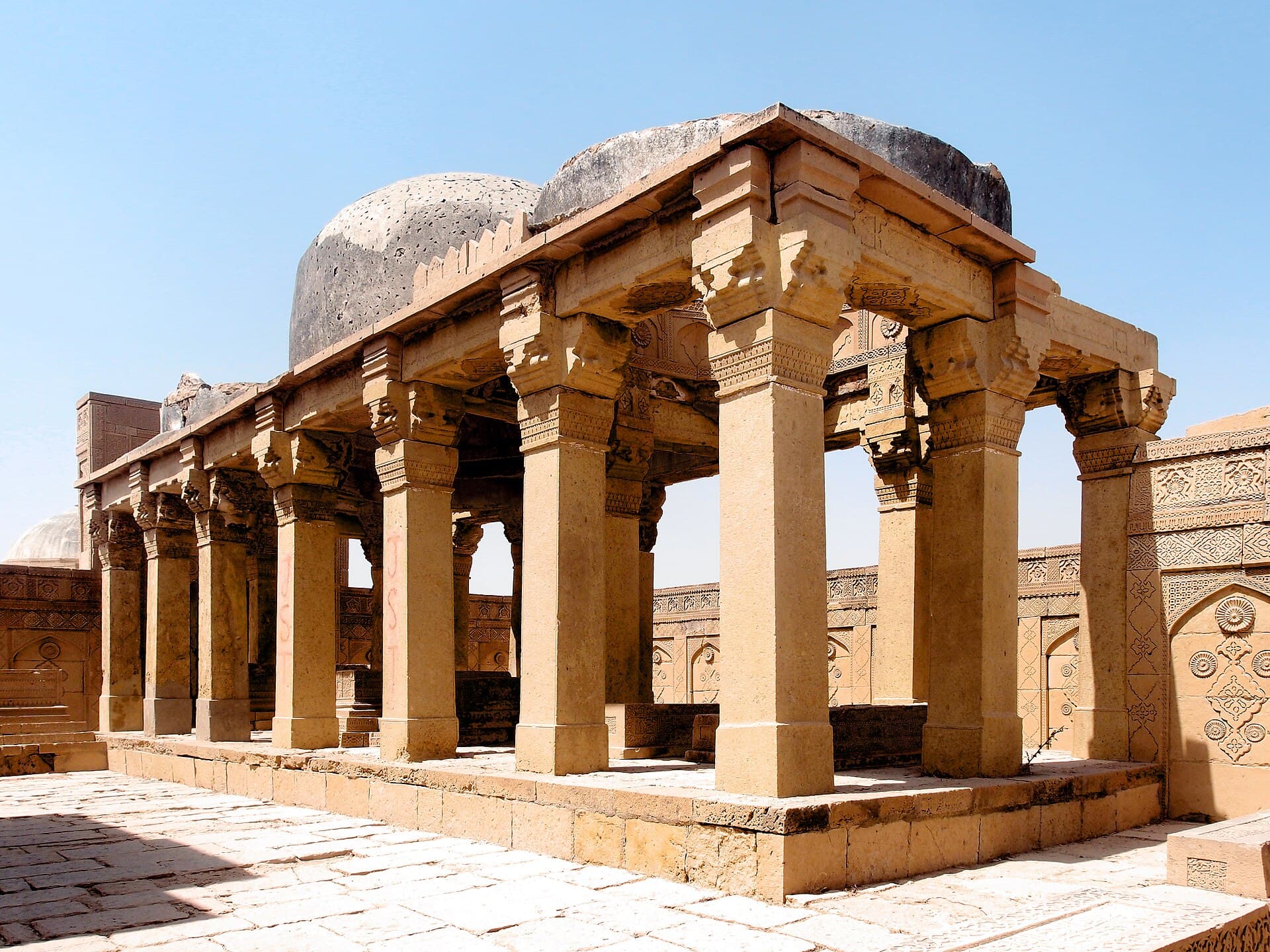
Makli Necropolis
A vast funerary landscape of carved stone tombs above Thatta, inscribed by UNESCO in 1981.
- Best season
- Autumn · Winter
- Suggested duration
- 1 day
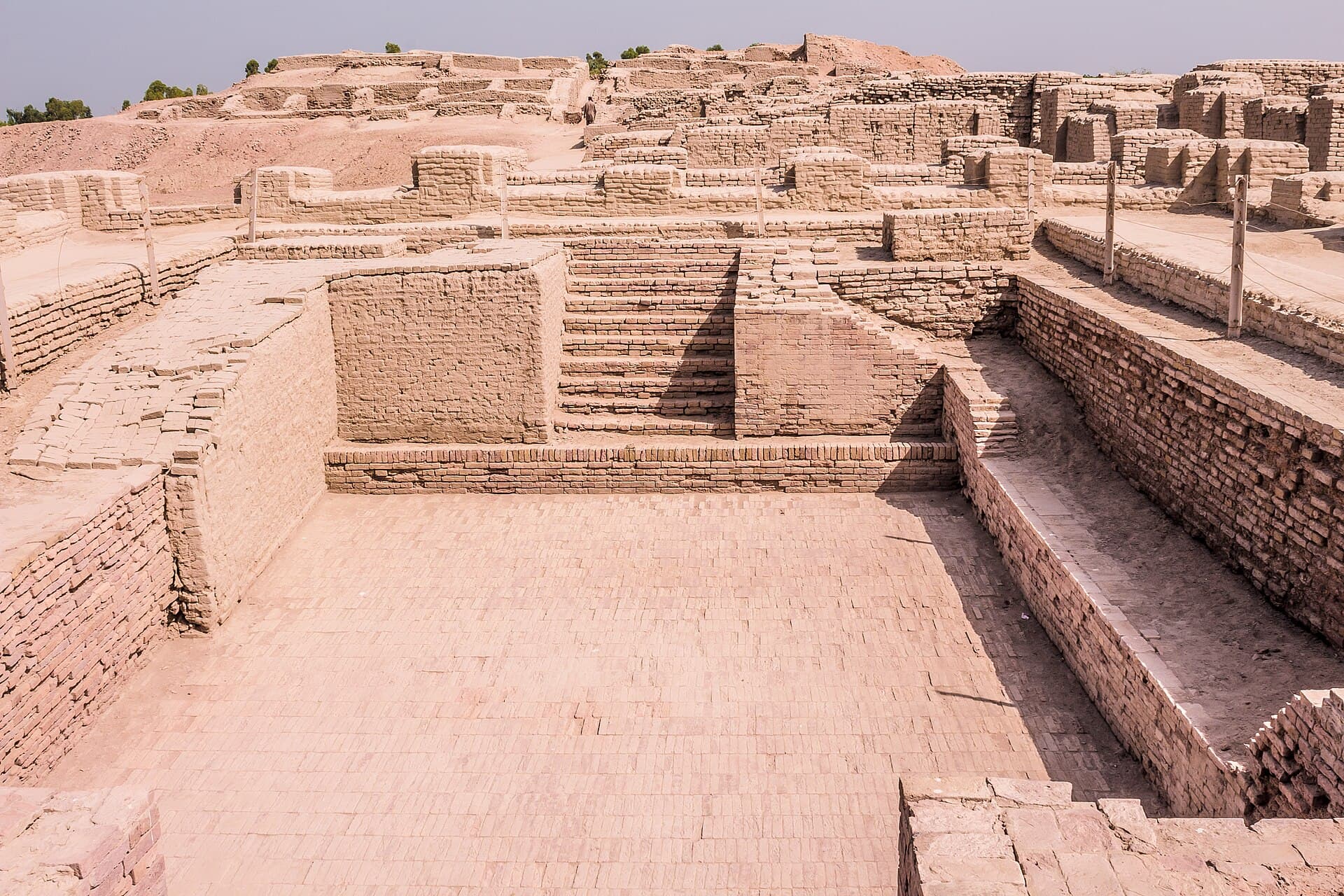
The largest excavated city of the Indus Valley Civilisation, inscribed as a UNESCO World Heritage Site in 1980.
Anything we haven't confirmed is labelled clearly rather than guessed at.
What makes Mohenjo-daro remarkable is not a single monument but a plan: streets on a grid, houses with wells and bathrooms, and covered drains running the length of them, built more than four thousand years ago. The Great Bath — a brick-lined tank with steps down at either end, made watertight with bitumen — is the structure visitors come for, and the stupa mound above it is a later Buddhist addition on top of the Bronze Age city. The site is also in trouble: the brickwork is exposed to salt and weather, and long-running conservation work is the reason some areas are fenced or closed. It was inscribed on the UNESCO World Heritage List in 1980.
What makes it remarkable is not a single monument but a plan — streets on a grid, drains running their length, built more than four thousand years ago.
Flat alluvial country beside the Indus, with the excavated brick streets and mounds standing above the surrounding fields.
A Sindhi-speaking district holding the principal city of the Indus Valley Civilisation, excavated from the 1920s onward.
Travellers interested in archaeology and early urban history
A half-day at the site and museum, usually from Larkana
Estimated visit length: Half a day
Every photo is real and credited — see the attribution section below for the full list.
Flat alluvial country beside the Indus, with the excavated brick streets and mounds standing above the surrounding fields.
Streets, drains and housing blocks rather than a single surviving monument.
A brick tank sealed with bitumen, the best-known structure on the site.
Finds from the excavations displayed beside the city they came from.
Availability is seasonal and not confirmed as currently operating — see each activity's verification status.
The street grid, housing blocks and drainage on the authorised routes.
The central tank and the stupa mound above it.
Excavated finds; opening arrangements need verification.
Comfortable early, turning hot well before summer.
Summer on the lower Indus is extreme and the site is entirely unshaded.
Seasonal access and weather conditions may change. Verify locally before travel.
A structural preview only. Detailed routes, driving times and road quality are coming in Phase 5.
Interactive route map
Detailed routes coming in Phase 5
Availability is never claimed without evidence — unconfirmed facilities default to unknown or needs-verification.
Limited at the site; Larkana is the nearest reliable option.
Accommodation is in Larkana.
Weather and trail conditions change without notice and are not tracked live on this page. Check current conditions before travelling.
Road conditions are not currently verified. A local guide is recommended for remote or high-altitude sections.
Written factually, without claiming accessibility we haven't confirmed.
General guidance — customs vary between communities, and this may not cover every situation.
A Sindhi-speaking district holding the principal city of the Indus Valley Civilisation, excavated from the 1920s onward.
A vast funerary landscape of carved stone tombs above Thatta, inscribed by UNESCO in 1981.
Yes — inscribed on the UNESCO World Heritage List in 1980.
Autumn and winter. The site is unshaded and summer on the lower Indus is extreme.
On the authorised routes only. The brickwork is fragile and eroding, and climbing on it causes real damage.
Yes, a site museum holding excavated finds; opening hours need verification before travelling.
What people who have been to Mohenjo-daro have shared. Everything below is a traveller's own account, not Kohistan Journey's verified information.
No trip reports from Mohenjo-daro yet.
Write the first oneBe the first to share a photo from Mohenjo-daro.
Share a photoNo traveller updates for Mohenjo-daro yet.
Post an updatePhotographs shared by travellers who have been here. Personal accounts, not Kohistan Journey's verified information — check anything time-sensitive locally.
No traveller posts yet
Nobody has shared a photo tagged to Mohenjo-daro yet. If you have been, you can be the first.