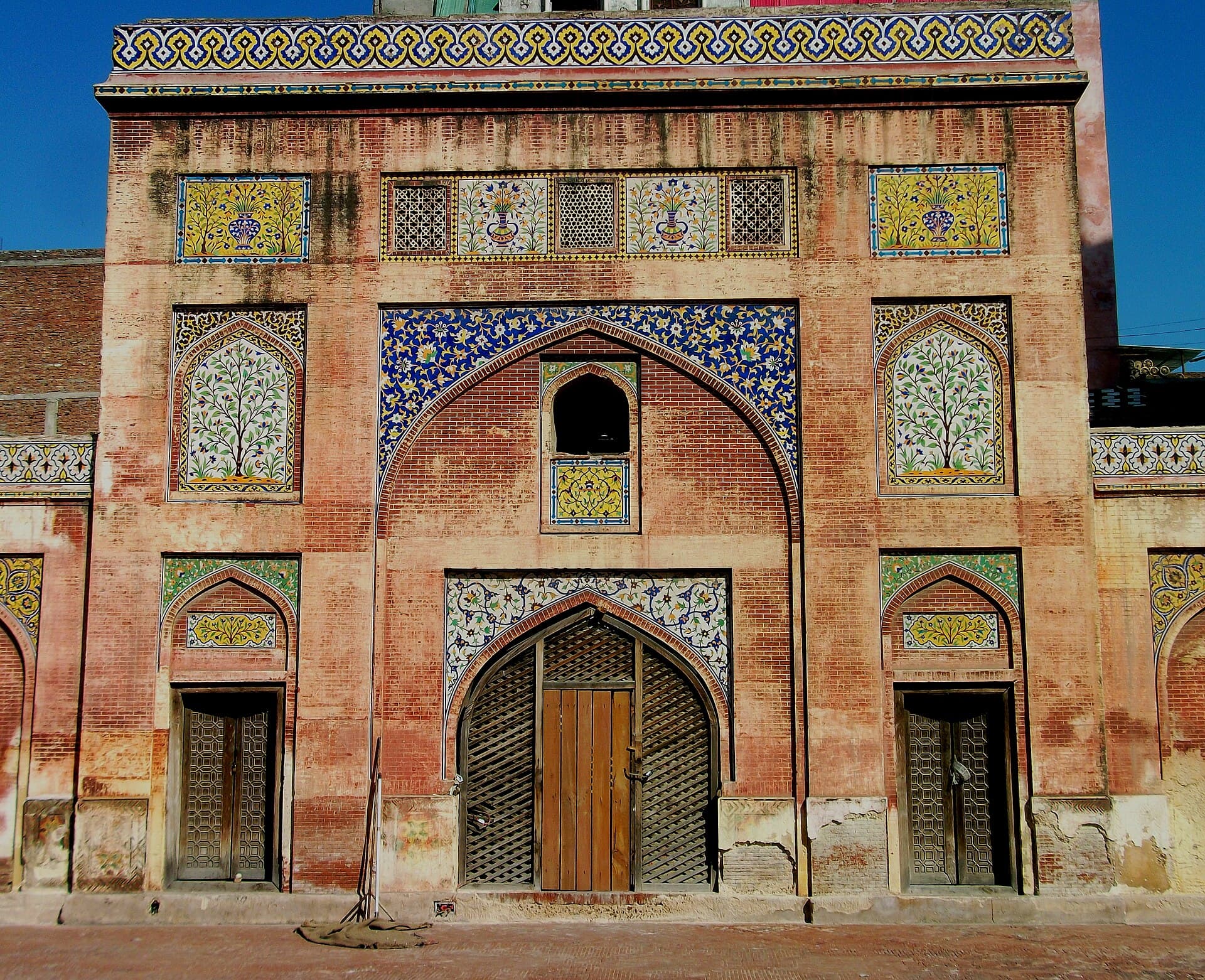
Needs verification
Lahore Walled City
The old city inside Lahore's gates — Wazir Khan Mosque, the Delhi Gate bazaars and the havelis behind them.
- Best season
- Autumn · Winter · Spring
- Suggested duration
- 1 day
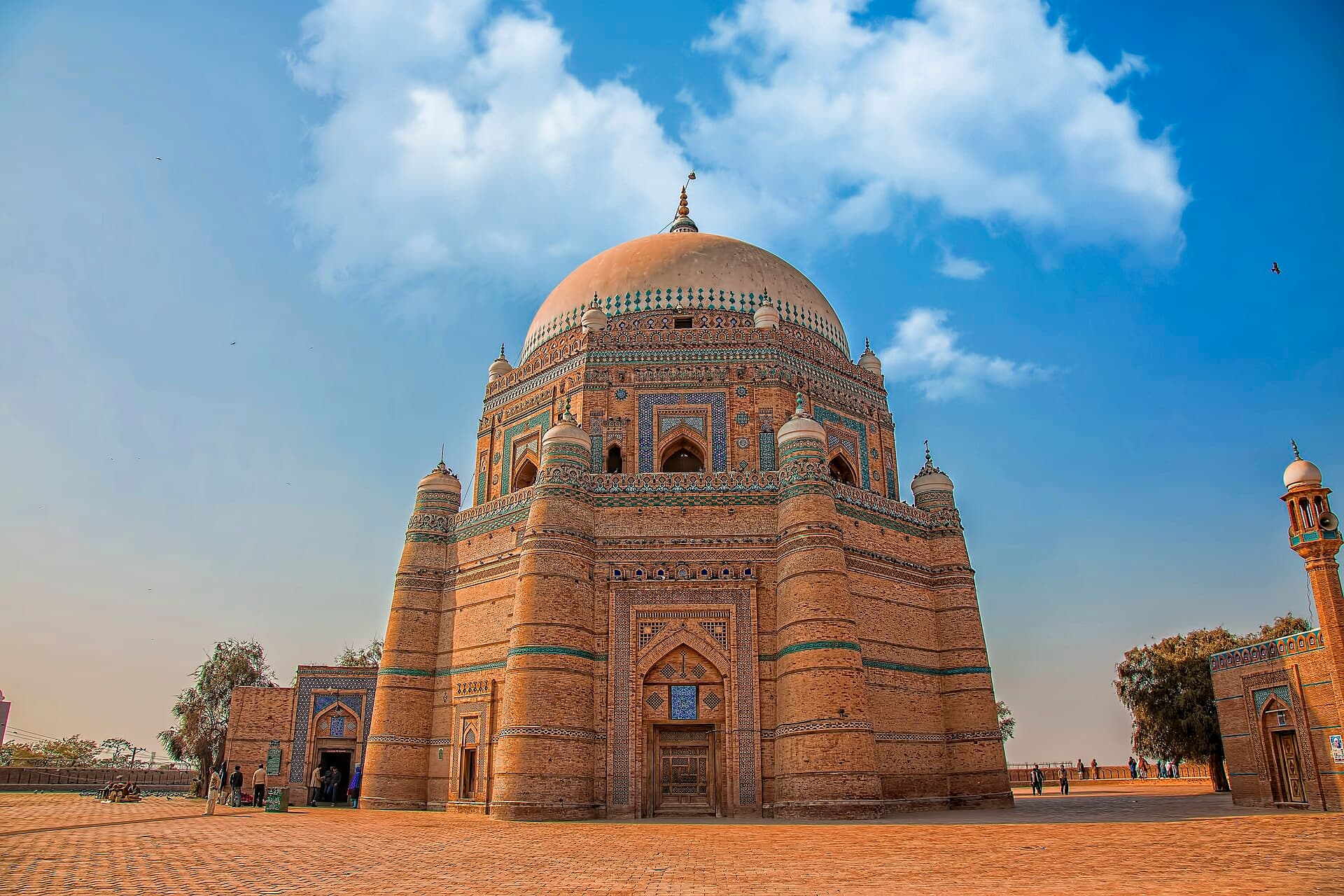
One of the oldest continuously inhabited cities in the region, known for its Sufi shrines and blue-tiled tombs.
Anything we haven't confirmed is labelled clearly rather than guessed at.
Multan's reputation rests on its shrines, and the tomb of Shah Rukn-e-Alam is the one that defines the city's profile: an octagonal brick mass banded in blue and turquoise tile, standing on the old fort mound above everything around it. The city is often called the city of saints, and the shrines are not monuments set aside from daily life — they are busy, particularly at festivals, and that is what a visitor is really coming to see. The bazaars are known for tilework, lacquered woodwork and mangoes in season. It is hot: the summer here is among the most severe in the country, and the visiting season is correspondingly narrow.
The shrines are not monuments set aside from daily life — they are busy, and that is what a visitor is really coming to see.
A flat southern Punjab city on the old bank of the Chenab, its shrines raised on mounds above the surrounding streets.
A Saraiki- and Urdu-speaking city with a centuries-old Sufi tradition that still shapes its calendar and its architecture.
Travellers interested in Sufi heritage, tilework and southern Punjab
A day or two based in the city, timed outside the summer
Estimated visit length: 1-2 days
Every photo is real and credited — see the attribution section below for the full list.
A flat southern Punjab city on the old bank of the Chenab, its shrines raised on mounds above the surrounding streets.
The shrines are places of devotion first, busiest at the festivals in the city's calendar.
The tilework tradition that gives Multan's tombs their distinctive skyline.
Among the longest continuously inhabited places in the region.
Availability is seasonal and not confirmed as currently operating — see each activity's verification status.
The city's landmark shrine on the old fort mound.
Other shrines across the old city; which are open to visitors varies.
Tilework, lacquered woodwork and seasonal produce.
Comfortable early, turning hot well before summer proper.
Summer heat in southern Punjab is among the most severe in the country and makes sightseeing impractical for most visitors.
Seasonal access and weather conditions may change. Verify locally before travel.
A structural preview only. Detailed routes, driving times and road quality are coming in Phase 5.
Interactive route map
Detailed routes coming in Phase 5
Availability is never claimed without evidence — unconfirmed facilities default to unknown or needs-verification.
Weather and trail conditions change without notice and are not tracked live on this page. Check current conditions before travelling.
Road conditions are not currently verified. A local guide is recommended for remote or high-altitude sections.
Written factually, without claiming accessibility we haven't confirmed.
General guidance — customs vary between communities, and this may not cover every situation.
A Saraiki- and Urdu-speaking city with a centuries-old Sufi tradition that still shapes its calendar and its architecture.
The old city inside Lahore's gates — Wazir Khan Mosque, the Delhi Gate bazaars and the havelis behind them.
Autumn and winter. Summer heat in southern Punjab is severe enough to make sightseeing impractical for most visitors.
Generally yes, outside prayer and with modest dress, but access to inner chambers varies and needs local guidance.
The annual commemoration of a saint's death, when shrines are at their busiest; dates follow the Islamic calendar and need checking.
One to two days for the main shrines and the bazaars.
What people who have been to Multan have shared. Everything below is a traveller's own account, not Kohistan Journey's verified information.
No trip reports from Multan yet.
Write the first oneBe the first to share a photo from Multan.
Share a photoNo traveller updates for Multan yet.
Post an updatePhotographs shared by travellers who have been here. Personal accounts, not Kohistan Journey's verified information — check anything time-sensitive locally.
No traveller posts yet
Nobody has shared a photo tagged to Multan yet. If you have been, you can be the first.